August 8, 2026
Business GrowthWhere Weddings Quietly Lose Money
A wedding can look good on paper and earn you almost nothing. Here is where the money goes, and how I price wedding work at Booker Flowers now.
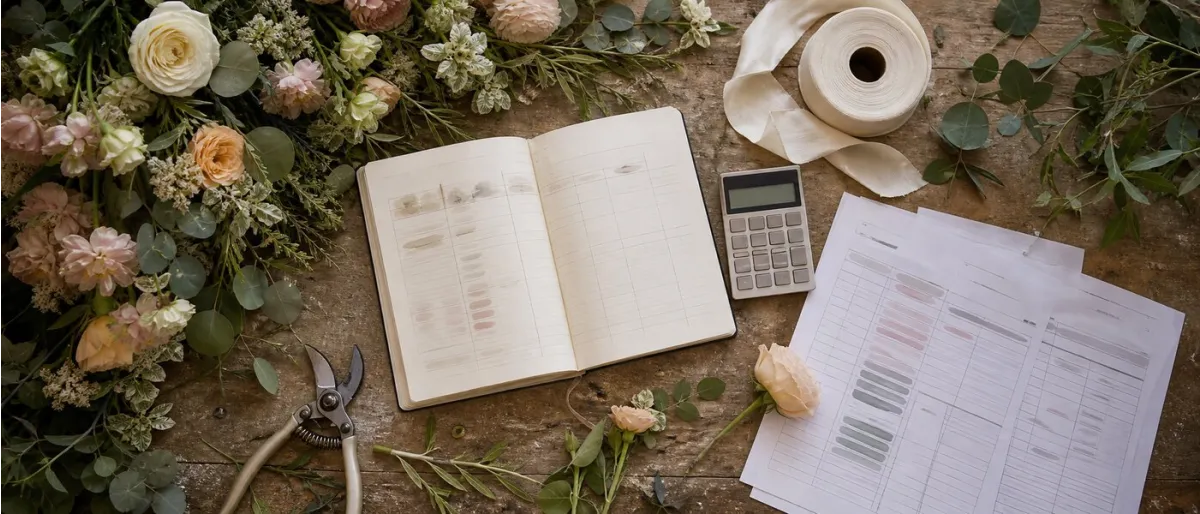
I have been quoting weddings at Booker Flowers in Liverpool for a long time, and for years I did it the hard way. A bride would come in on a Saturday, we would talk for an hour, and I would take my notes home with me. That evening I would sit at the kitchen table with the wholesaler's price list, a calculator and a blank document, working out what every flower cost and typing the lot into a list.
Some of those weddings earned what I thought they had earned. Many did not earn enough and I only found out when it was too late.
This blog is about what I changed to make sure I make money on every Wedding and Event we price.
The Kitchen-Table Quote
The problem with pricing a wedding at the kitchen table is not the arithmetic. It is that every wedding starts from nothing.
You look up the roses that week. You count the eucalyptus. You add ribbon, wrap and pins. Then you guess at your time, add something for the setup, and send it. Next month another bride comes in and you do the whole thing again, from scratch, at a different time of night, in a different mood.
Two identical arrangements quoted six weeks apart came out at different prices in my shop more than once. Neither of them was wrong exactly. They were both guesses, made by a tired person, on a Sunday.
What a Wedding Costs to Make
Ask any florist what a bridal bouquet costs to make and you will get a reasonable answer. We make them constantly, so the number is in our heads.
Now ask what twelve table centres cost, plus an arch, plus the sundries, plus two of you at the venue for three hours on the Friday afternoon. That is where it gets shaky. The bouquet is the bit you know, hoewever it is usually the smallest line on the quote.
Making sure I was costing in all the ancillary labour is where i was the worst. On a wedding with fifteen pieces, the making, the conditioning, the loading, the driving and the setup add up to most of a working day for two people. If that is not on the quote as a line with a number against it, you have donated it.
The Changes You Never Charged For
A wedding sits on your books for six months or more, and it does not sit still. The palette shifts. The guest numbers move. Somebody's mother gets involved and the top table grows.
What used to happen in my shop is that the change went on the worksheet but did not always make it to quote meaning these small additions did not always get charged for. Multiply that across a season of weddings and it becomes significant.
Price the Stem Once
The fix starts in the ingredient library. Every flower, every bit of foliage and every sundry we buy sits there with two numbers against it: what we pay our supplier, and what we charge.
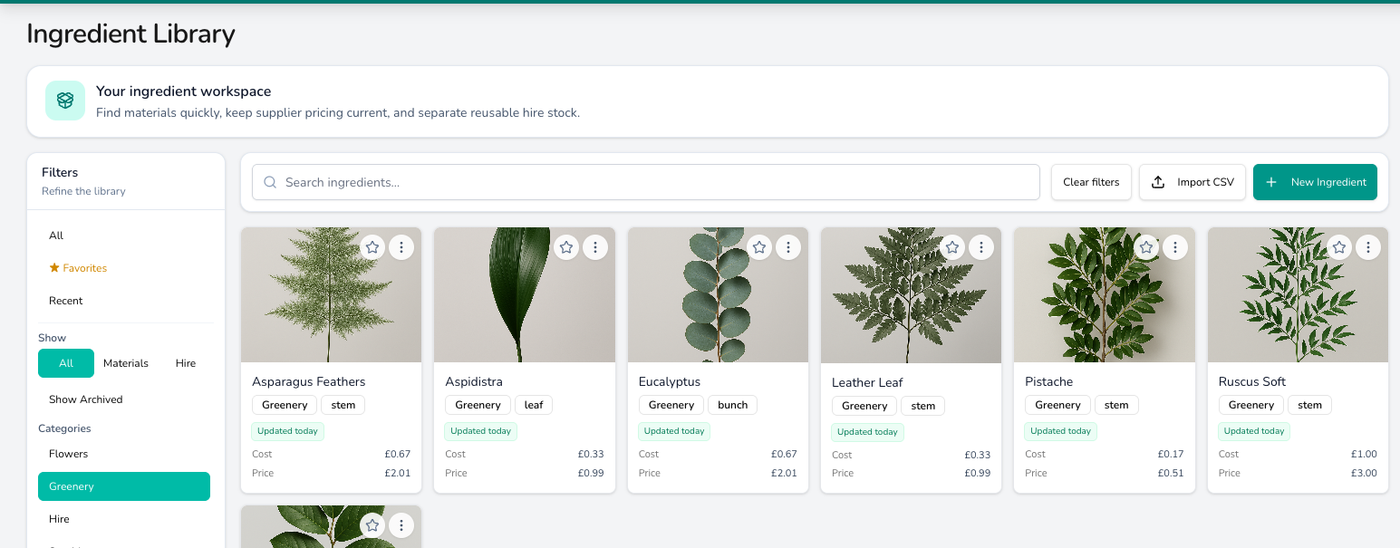
Eucalyptus at 67p in, £2.01 out. When the market moves I change it in one place, and every quote I build after that uses the new figure. The old price is kept with the date, so I can see what a stem cost me last March when I am looking at what last March's wedding really made.
Quotes already sent do not move. The price is captured onto the recipe at the moment I used it, so a wedding I priced in October holds October's numbers all the way through to the day.
Price the Design Once, Then Lock It
A recipe is one arrangement broken down: ten garden roses, five eucalyptus, three lisianthus, the ribbon, the wrap, and the labour to make it. Build it once save as a recipe to drop it into other wedding you quotes.
The part that changed how I price is that the cost sits directly under the sell price while I am building I can see how much it ingredients and how much is labour.
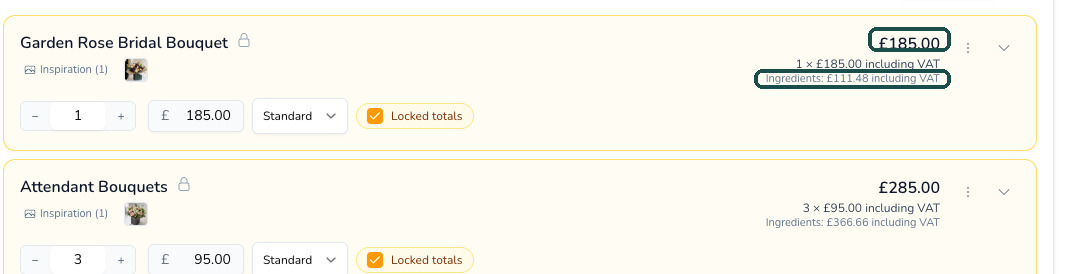
Then there is a tick box called Locked totals, once I have settled on £185, I lock it. I set how much labour I want for the items and the system tells me if I need to add or remove stems to hit the target quoted price.
Save the Whole Quote as a Template
Save a quote as a template and it keeps the groups, the arrangements, the recipes, the labour, the photos and which prices are locked. The next enquiry starts half built.
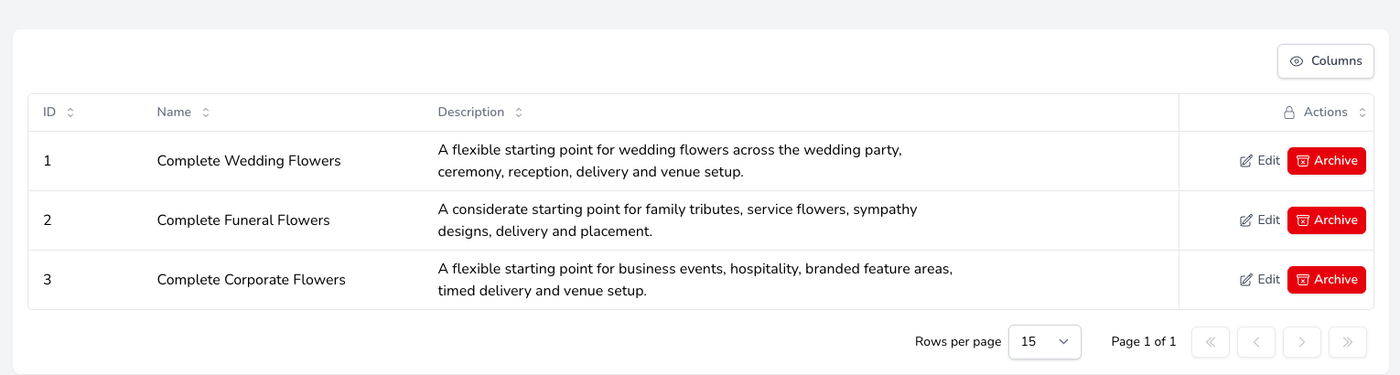
The speed is the obvious benefit. The margin is the better one. A template means the quote that goes out while I am not in the shop is priced the way I would have priced it. It is standardises my pricing across all my quotes and means anyone in my team can quote.
It is worth spending time getting your templates as you want them as they only need doing once. When it comes time to look at the following years prices I open a template, apply a percentage across the whole thing, round the figures to numbers I would say out loud, and save it as next season's template.
Every Change Gets Its Own Version
Change a quote in Events and it saves a new version rather than writing over the old one. Quote History is a button at the top of the quotation screen.

The proposal she signed is frozen exactly as she signed it, with her name, her email and a time stamp on it. Nobody can edit that afterwards, including me. When she adds those forty buttonholes in week six a new proposal is created with the old saved as part of the paper trail, when all amendments are made you can resend for her to sign the new version.
Deposits, Balances and What Is Still Owed
I record what comes in as it comes in, and the balance and the payment status follow on their own. Unpaid, part paid, paid, on the wedding and across the whole list.
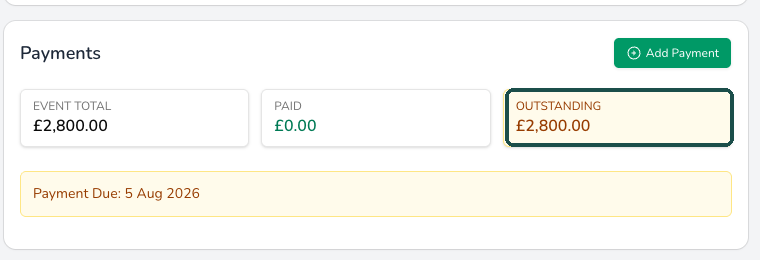
You record what has been paid and it is easy to see what is outstanding. If an event card on your events dashboard has an orange tick it on it, it means it is part paid and a green tick means it is paid in full
From Signed Proposal to the Van
When I am ready to place my flower order for an event I open the Options menu on the quotation and choose Quotation Menu. It adds up every ingredient across every arrangement on that wedding, with total quantities and total costs, and a breakdown by category. I tick what I need and send it to a task for whoever is buying, or print it out.
There is also worksheets with each item and stems breakdowns for each individual items ready for the items to be created in the workroom. Nothing gets keyed in twice.
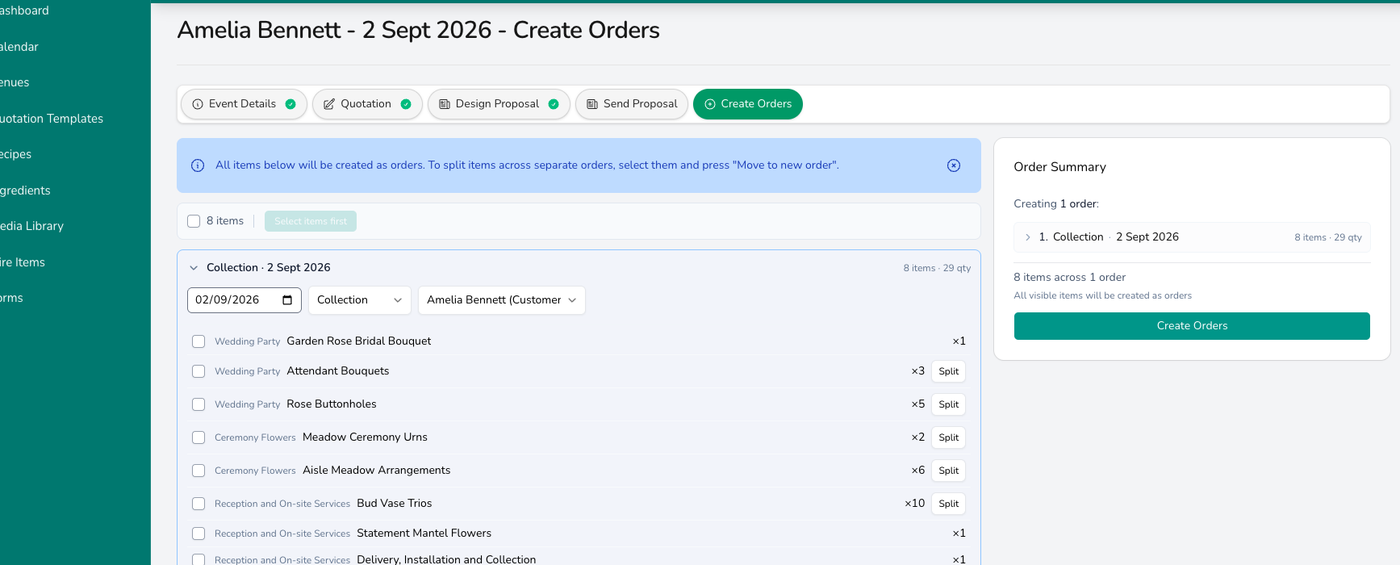
When it is time to sort the logistics I turn my event into orders that can be managed on the orders dashboard and put on delivery runs, etc. I set the date, choose collection or delivery, pick the venue, and split anything that needs splitting. Six table centres to the church on the Friday, six to the reception venue on the Saturday. Those orders land on the orders dashboard with the rest of that day's work, and get made up, checked and delivered like anything else.
What It Adds Up To
We have run our weddings and events at Booker Flowers this way since 2022. As things stand today, that is over 200 events, more than 350 proposals sent and 20-plus quotation templates.
None of that got built in one sitting. It builds itself while you quote. The first wedding you price properly takes an evening. By the tenth you are loading a template, changing the colours and sending it the same afternoon, and the margin on it is a number you decided before the event rather than after.
Somebody Other Than Me
Chantelle Kennedy owns Pure Flowers of Distinction in Boyle, Co. Roscommon. She used to run one system for her shop orders and the till and a different one for weddings, and she moved the lot across.
The weddings side runs through Digital Florists Events, so a proposal can quote and amend over the months and the make-tasks let us start prepping ahead of the day.
Chantelle Kennedy, Pure Flowers of Distinction, Boyle
Where to Start
If you are not with us yet, Events is £75 a month per shop, ex VAT, with a 30-day free trial Book a demo to see how Digital Florists Events could work in your florist business.
If you are already using Digital Florists for orders you get 1/3 off so Events only costs you £50 per month.
Written by
Gemma Wakerley

See it in your shop
Book a demo and we'll walk through Digital Florists with your shop in mind.
After the demo, choose whether and when we set up your 30-day no-card trial.